Reka's Rho-1: One 19B Model for Text, Video, and Robots
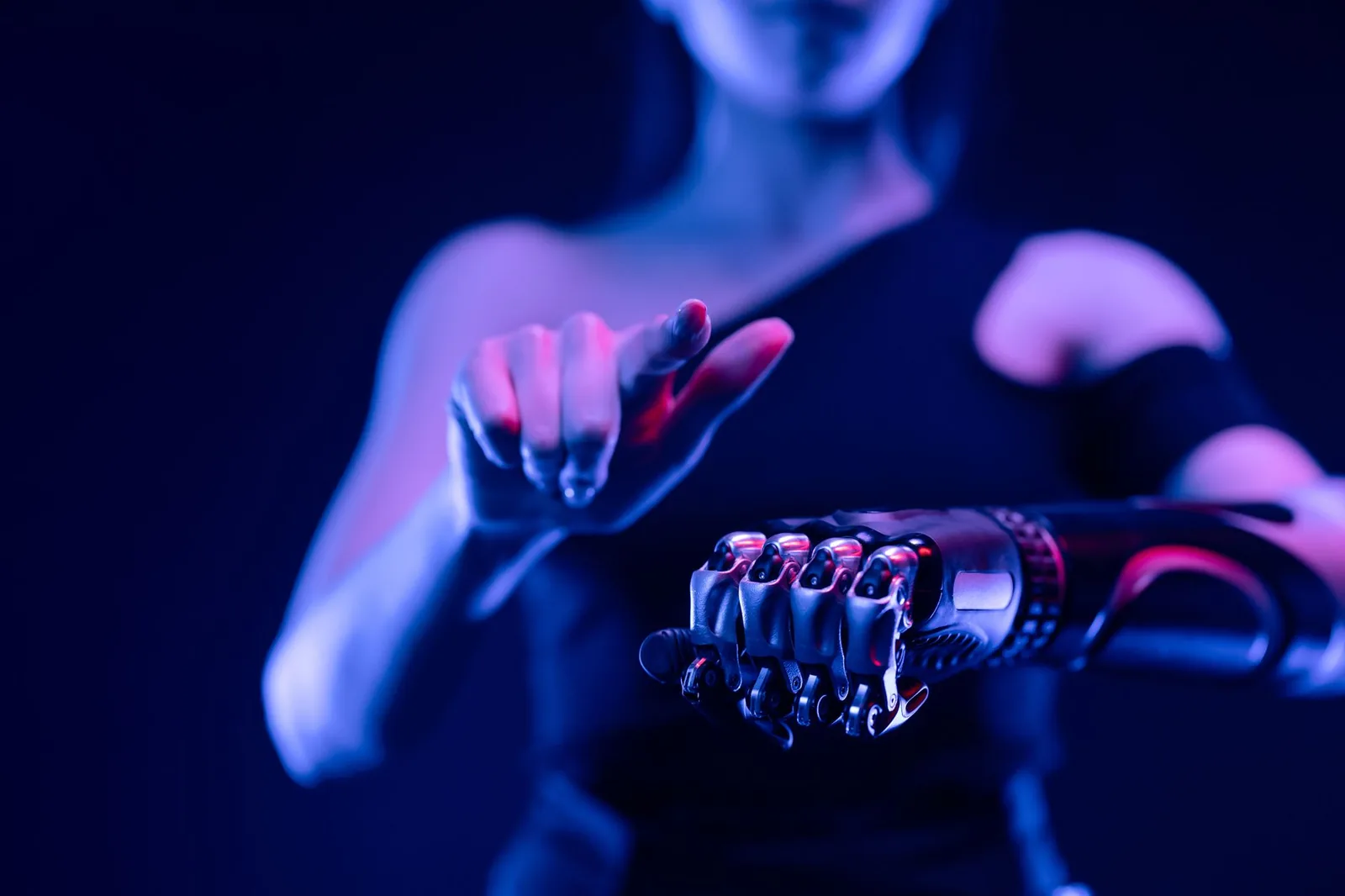
If you run a small business, your automation stack probably looks like a chain of specialists: one service reads documents, another describes images, a third decides what to do next. Every handoff is a place where something quietly breaks. Reka AI's new Rho-1 is a bet that one network can replace that chain, and the launch is worth reading closely, because the claim is bigger than the evidence behind it so far.
What Reka Actually Shipped
Reka released a research preview of Rho-1 on October 5, 2026. It is a 19-billion-parameter model that understands and generates text, images, and video, and also produces robot actions, all in one network (Runtime Wire). It was trained from scratch on 320 H100 GPUs over about three months (The Decoder).
The architectural claim is what matters. Reka describes one shared context window for every modality, with no tool calls and no external models, and the stated goal is to replace pipelines of specialist models (coverage of the launch). In plain terms: a photo, your instruction, and the history of what the system already did all live in the same token stream, and the same weights decide what happens next.
Two access details to pin down before anyone gets excited:
- No public weights and no public API. As of launch coverage, this is a research preview only (KuCoin News). I'm citing that item for access status.
- No pricing, licence, or commercial date. One source says access is by collaboration on Reka Cloud, another says to contact Reka. Neither gives a price or SLA. Nobody should plan an adoption timeline around this yet.
Why Handoffs Are the Real Problem
The bottleneck I see in client work is rarely model intelligence. It's that systems don't talk to each other. A typical multi-step automation has a perception step, a reasoning step, and an action step, each a separate service with its own failure modes and its own output format.
Here's the failure pattern in a conventional pipeline:
# Typical glue-code pipeline: every arrow is a lossy translation
description = vision_service.describe(photo)        # step 1: image -> text
plan = llm_service.plan(task, description)          # step 2: reasons about the TEXT, not the photo
result = action_service.execute(plan)               # step 3: acts on the plan
If describe() gets the photo wrong, plan() reasons confidently about a scene that never existed, and nothing downstream can catch it, because the original pixels never reach step 2. Most of the engineering effort on these systems goes into validation, retries, and format conversion at those seams, not into the task itself.
A unified model changes the shape of that problem. If the network that chooses the action is the same one that saw the image, there's no text summary standing in for perception. That's the actual idea behind omni-models, and it's the only reason I'd pay attention to this launch. A bigger spec sheet wouldn't be reason enough.
The caveat: "no lossy translation layer" is an architectural argument, not a measured result. Whether one network matches specialists on quality is unproven. The coverage notes there are no ablations or independent evaluations, and any hope that scaling will fix the model's known limits remains just that, a hope, not a result.
Reading the Numbers: What's Measured, What's Marketing
Reka published speed figures but no standard benchmark tables. As of this writing there are no independent benchmarks of any kind (DEV Community). Here is what's on the table, all of it company-reported:
| Claim | Figure | Status |
|---|---|---|
| Base model video generation speed | Median 0.79x real time, watchable stream in about 6 seconds | Reka's own post |
| Distilled variant | Denoising trajectory cut from 99 steps to 8 | Company-reported |
| Rho-1 Flash | 5.3-second clip in about 1 second (one outlet measured the shown clips at 1.11-2.01 seconds) | Company-reported |
| First-clip comparison | Rho-1: 7.0 seconds | Measured by Reka |
| Multi-agent pipeline comparison | 13.8 seconds | Labeled illustrative by Reka, not measured |
Two things to take from that table. First, "real time" headlines are wrong for the base model: Reka's own number is 0.79x, meaning slower than real time (Reka). Second, don't repeat the 13.8-second pipeline figure as if it benchmarks real systems. Reka itself calls it illustrative.
Reka also claims Rho-1 is among the fastest models in the world in every modality, based on internal testing. Nobody has verified that. Treat it as a vendor claim until someone outside Reka reproduces it.
The Robot Part: One Simulation Episode
The headline says the model controls robots. The evidence is thinner. The demo is a LIBERO simulation task, where Rho-1 emits seven action channels together with a predicted wrist-camera view (AlphaSignal). An editor's check of Reka's post found no real-robot results and no task success rates. The robot evidence amounts to one simulated episode plus generated gripper video clips (Machine Herald review).
So the accurate statement is "robot actions in simulation." The published evidence relates only to simulation. If your business has anything to do with physical automation, the right posture is to watch for a real-hardware demo with published success rates, not to plan around this.
The design is still interesting. Emitting actions plus a predicted camera view in the same stream as language and video is a coherent way to build a world-model-style controller. It just hasn't been tested where it counts.
Known Limits, in Reka's Own Words
The most useful part of the launch material is the limitations list, because it tells you where not to point the model. Reka's own caveats include a native video resolution cap of 672x384, structural drift in longer video, unreliable object tracking across video, and brittle targeted edits (Digg).
Translate those into small-business terms:
- 672x384 native resolution is fine for a research demo and not fine for anything customer-facing that needs sharp output.
- Drift in longer video means long clips are exactly where you'd lose coherence. Reka navigates this as a structural drift in longer video, so treat anything long as unproven.
- Unreliable object tracking rules out the "watch the warehouse camera and tell me what moved" class of task for now.
- Brittle targeted edits means "change just this one thing in the clip" is not dependable.
I haven't seen any public data on how Rho-1 handles the inputs small businesses actually have: blurry phone photos, scanned invoices, messy PDFs. A lab model on clean demo inputs tells you very little about those.
What to Do This Week, With No New Model
Rho-1 isn't available to test, so the useful move is to prepare the ground. It works whether you later adopt Rho-1, a competitor, or just better separate tools. Map one workflow on one page:
- List every point where one system's output becomes another system's input: email to CRM, PDF to accounting, photo to report.
- Mark each handoff where a human currently fixes things by hand.
- Rank those by how often the fix happens and how long it takes.
You can capture it in something as plain as this:
workflow: invoice-intake
handoffs:
  - from: email_attachment
    to: accounting_software
    human_fix: yes        # someone retypes totals when OCR misreads
    frequency: daily
  - from: accounting_software
    to: client_reminder
    human_fix: no
    frequency: weekly
The fix-by-hand rows are your highest-value targets. When a unified model becomes testable, you'll know exactly which handoff to aim it at, and you can run a small side-by-side trial against your current setup instead of judging from a launch post.
My read: the model that wins for small businesses won't be the biggest one. It'll be the one that removes the most glue code at a price you can justify. Leaderboard points matter less to a ten-person shop than fewer handoffs. And the model is the easy part. Knowing what to point it at is the work.
Where This Fits in Practice
The handoff audit above is a sensible place to start: map where outputs from one system feed another, find the points where a person patches things by hand, and automate those first with whatever tools are reliable today. Because the work is organized around workflows instead of around a specific model, swapping in a better or unified model later is a contained change rather than a rebuild. If a model like Rho-1 reaches real availability with documented pricing and terms, it becomes one more component to trial against the existing setup.
Want more like this?
I publish practical AI automation and engineering content from Lazar Milićević, under the BizFlowAI channel.
Planning an AI automation project or need a second opinion on your architecture?
Connect with me on LinkedIn
Visit bizflowai.io for more on practical AI automation for solopreneurs and small teams.
Frequently asked questions
What is Rho-1?
Rho-1 is a 19-billion-parameter omni-model released by Reka AI. Text, images, video, and robot control actions all run as tokens in one shared context window inside a single neural network, rather than being routed to separate specialist models. Reka says it was trained on 320 H100 GPUs in roughly three months. Those figures are vendor claims until independent benchmarks confirm them.
Why does a single omni-model matter for small teams?
Many multimodal systems chain separate services for vision, language, and action, and each handoff is a failure point. If one step misdescribes a photo, the next step reasons confidently from that error. A single model with shared context removes the lossy translation layer between perception and decision. That can cut the glue code teams spend most of their engineering time maintaining.
How do I find the best workflow to automate with a unified AI model?
Map one workflow on a single page and count the handoffs between tools, meaning every place one system's output becomes another's input, such as email to CRM or PDF to accounting. Mark each handoff where a person currently fixes things by hand. Those manual fix-it points are your highest-value automation targets, whether you use today's separate tools or a unified model later.
Why does model size matter for businesses using multimodal AI?
At 19 billion parameters, Rho-1 is small by frontier standards. Smaller models are generally cheaper to host, faster to respond, and realistic to run on hardware a mid-sized business can rent. If quality holds up, that could move multimodal AI from enterprise-only budgets toward options a ten-person company can consider. Pricing, API terms, and licensing have not yet been confirmed.
Is Rho-1 ready for production use?
Not yet established. A lab announcement is not a production system. Nobody outside Reka has shown how Rho-1 handles messy real-world inputs like blurry phone photos, scanned invoices, or two-hour videos. Its robot control capability especially needs an unstaged demonstration. Pricing, API terms, and licensing are also unknown. Treat Reka's performance and compute claims as unverified until independent benchmarks appear.