Perplexity Portable Computer: Local Agents, Zero Tokens
You've been burning cash on Claude and GPT tokens for months. Every time your agent loops through a document, retries a failed tool call, or reasons over a long context, the meter ticks. For a solo dev running a lead-enrichment pipeline, that's an annoyance. For an SMB with three agents in production, it's a line item that grows every quarter with no ceiling.
Perplexity's Portable Computer launch — a fully local version of its agentic "Computer" platform running on Nvidia DGX Spark and consumer RTX Linux machines — is the first serious mainstream attempt to change the economics. No API calls. No per-token charges. Just hardware you already bought, doing the work.
Here's what actually matters for people who ship agents, not people who tweet about them.
What Perplexity Portable Computer actually is
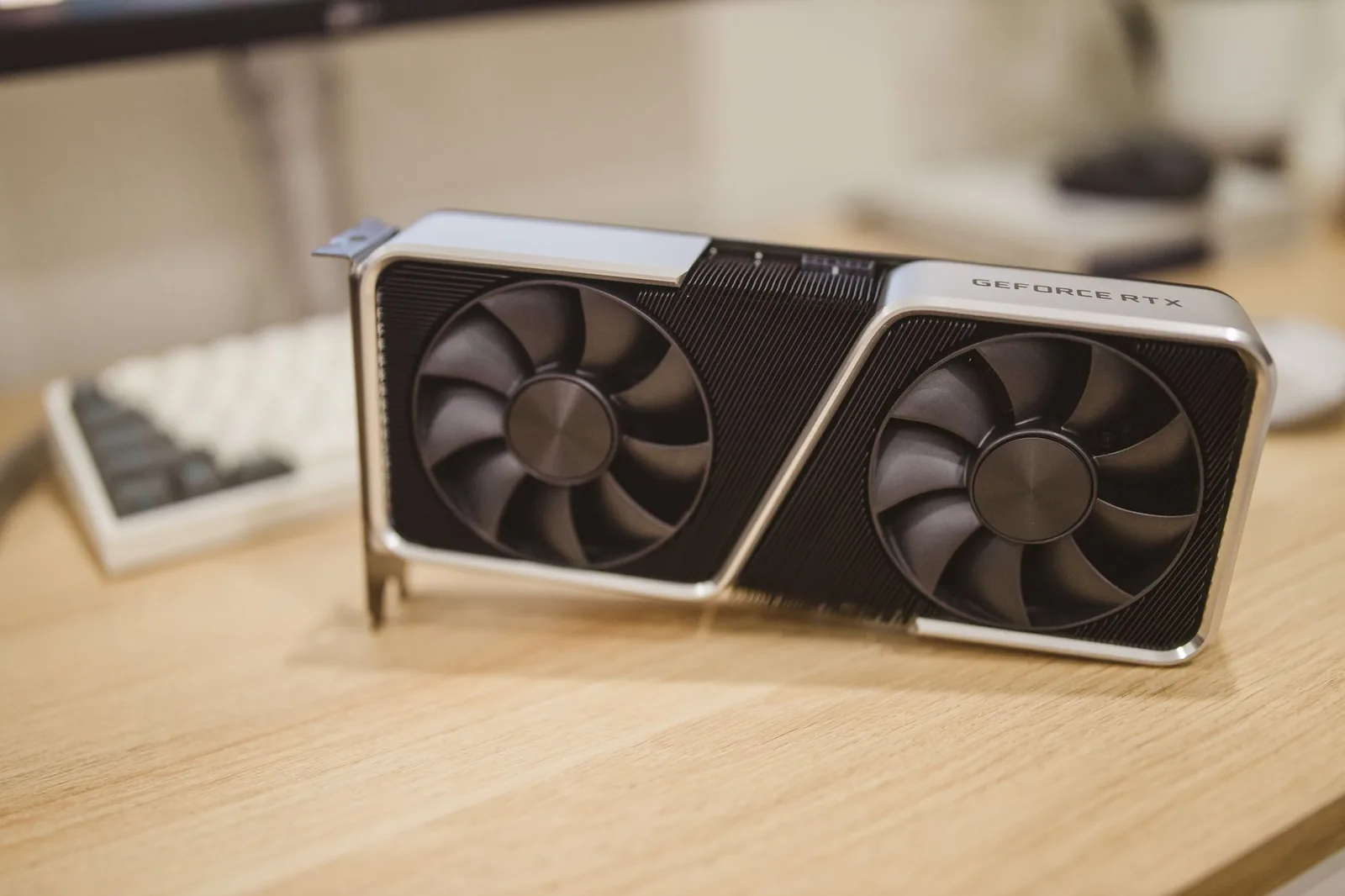
Portable Computer is a local-execution variant of Perplexity's agentic Computer product. The agent — capable of browsing, reasoning, calling tools, and completing multi-step tasks — runs on hardware the user owns. Perplexity's launch partners are Nvidia's DGX Spark (a desktop-form-factor "supercomputer" targeted at AI developers) and Linux workstations equipped with Nvidia RTX-class GPUs.
The key architectural claim: the model weights, the agent loop, tool execution, and reasoning all happen on-device. No round-trip to a cloud LLM provider. That's the difference between "local inference for a chatbot" (already common with Ollama, LM Studio, vLLM) and "local inference for an agent that browses, executes shell commands, and orchestrates tools" (much rarer, much harder).
For SMBs, three things follow directly:
- Zero marginal token cost. Once the hardware is bought and the electricity is paid, an agent run costs you nothing extra whether it's 5,000 tokens or 5 million.
- Data locality. Sensitive documents, customer records, and internal codebases don't leave the machine. That reshapes vendor review and compliance conversations.
- Latency is a hardware question, not a network one. Your bottleneck is GPU memory bandwidth, not the round-trip to us-east-1.
Why "local agents" is different from "local LLMs"
Running Llama 3 or Qwen locally has been possible for over a year with Ollama and llama.cpp. That's a chat interface with a model behind it. An agent is different. It needs:
- A model capable of reliable tool use (structured output, function calling, JSON schema adherence).
- A runtime that executes tools safely — browser control, shell access, file I/O, HTTP calls.
- A memory / context layer so multi-step tasks don't collapse after step three.
- Guardrails: permission prompts, sandboxing, revocable access.
The hard part isn't the model. It's the plumbing. Most local LLM stacks stop at step 1. Perplexity is shipping something closer to Claude Code or OpenAI's Agents SDK, but running entirely on your GPU.
Here's a rough mental model of the layers:
┌─────────────────────────────────────────┐
│  Task input (natural language)          │
├─────────────────────────────────────────┤
│  Planner / reasoner (local LLM)         │
├─────────────────────────────────────────┤
│  Tool router (browser, shell, files)    │
├─────────────────────────────────────────┤
│  Sandbox + permission layer             │
├─────────────────────────────────────────┤
│  Nvidia RTX / DGX Spark (CUDA runtime)  │
└─────────────────────────────────────────┘
Every layer above the GPU has to work offline, deterministically, and without leaking to a cloud fallback. That's the engineering claim Perplexity is making.
The build-vs-buy math for SMBs
This is where it gets interesting. Let's model a realistic small-team scenario without inventing numbers.
Say you run a 5-person agency. You have three production agents: a lead-enrichment worker, an inbox triage assistant, and a proposal-drafting helper. Together they consume a nontrivial slice of your monthly OpenAI or Anthropic bill. As you scale usage, that bill grows linearly.
Now consider the local alternative:
| Factor | Cloud API (Claude/GPT) | Local (Portable Computer class) |
|---|---|---|
| Upfront cost | ~$0 | Hardware purchase (DGX Spark or RTX workstation) |
| Marginal cost per run | Per-token pricing | Electricity |
| Scaling cost curve | Linear with usage | Flat until you saturate the GPU |
| Model quality ceiling | Frontier | Best available open-weights |
| Data leaves your network | Yes | No |
| Ops burden | Low (someone else's problem) | Higher (you own uptime) |
| Failure modes | Rate limits, provider outages | Hardware failures, driver issues |
The break-even isn't universal. For a hobby project doing 200 runs a month, cloud wins forever. For an SMB running heavy, repetitive agent workloads — document processing, batch scraping, code review at scale — a one-time hardware spend can pay for itself in months, not years.
The honest catch: the frontier is still in the cloud. GPT-5-class or Claude Opus-class reasoning is not (yet) matched by anything you can run on a single RTX card. So the real question isn't "cloud or local" — it's "which parts of my workload actually need frontier reasoning, and which are fine on a strong open-weights model running locally?"
A hybrid architecture that actually works
For most SMBs, the answer is a two-tier pipeline: local for the volume, cloud for the hard parts. Something like this:
# Simplified router: local first, cloud fallback for hard tasks
from local_agent import LocalAgent
from anthropic import Anthropic

local = LocalAgent(model="qwen3-coder-30b")  # runs on RTX workstation
cloud = Anthropic()

def route_task(task):
    complexity = classify(task)  # local classifier, cheap

    if complexity == "routine":
        # e.g. extract fields from an email, summarize a doc,
        # look up a record, format a response
        return local.run(task)

    if complexity == "hard":
        # e.g. multi-doc reasoning, ambiguous spec, novel code
        return cloud.messages.create(
            model="claude-opus-4-5",
            messages=[{"role": "user", "content": task}]
        )
The classifier is the interesting bit. It doesn't need to be smart — a small local model or even rule-based routing (word count, keyword presence, prior task type) is enough to catch 70-80% of routine work and keep it off your cloud bill.
A concrete example from a real lead-triage pipeline:
- Local (Portable Computer / RTX): parse inbound form submission, enrich with public company data via a scraper tool, score the lead against ICP criteria, write it to the CRM.
- Cloud (Claude): for leads that score high AND have ambiguous fit signals, generate a personalized outreach draft that a human will review.
The volume is in the first bucket. The quality-sensitive work is in the second. The bill collapses.
What you need to actually run this
If you're evaluating whether Portable Computer or a similar local-agent stack fits your operation, here's the honest hardware and ops picture. Check Nvidia's and Perplexity's current pricing pages for exact figures — they move around.
Hardware options, roughly in order of cost:
- Consumer RTX workstation — a single RTX 4090 or 5090-class card in a Linux desktop. Good for 7B-30B parameter models at reasonable quantization. Realistic for a solo dev or a team that wants one shared agent host.
- Multi-GPU workstation — two or more RTX cards, more VRAM headroom, can run larger models or serve multiple concurrent agent sessions.
- DGX Spark — Nvidia's desktop-form-factor "AI supercomputer." Designed specifically for local AI dev work. Priced accordingly.
Software you'll need to make peace with:
- Linux (Ubuntu is the path of least resistance).
- CUDA drivers and the periodic pain of keeping them aligned with your inference runtime.
- A model-serving stack (Perplexity's runtime, or vLLM / TGI / llama.cpp underneath).
- Observability. When your agent silently fails at 3 a.m., you need logs, traces, and a way to replay the task. Cloud providers give you this for free. Locally, you build it.
The ops burden is the part nobody talks about. A Claude API key never has a driver update. Your RTX box does. Budget for it.
The failure modes to plan for
Local agents fail differently than cloud agents. Some things I'd flag before committing:
Model drift and updates. Cloud providers ship new model versions constantly. Locally, you pin a model and it stays pinned until you decide to upgrade — which is good for reproducibility, bad for capability. If a new open-weights release lands that's 20% better at your task, you have to deliberately migrate.
Context window realities. Frontier cloud models offer 200k+ token contexts. Most open-weights models you can run on a single RTX card offer less, and effective quality often degrades earlier than the advertised limit. If your agent needs to reason over a 500-page contract in one shot, local is not there yet.
Tool ecosystem. MCP, browser tools, and the entire integration ecosystem grew up around cloud LLMs. Local runtimes are catching up but expect rougher edges — fewer pre-built connectors, more DIY.
Concurrency. One RTX card serves a limited number of concurrent agent sessions before latency degrades. Cloud APIs scale to your credit card. If your workload is bursty (Monday morning, everyone runs their weekly reports), local hardware needs to be sized for the peak, not the average.
None of these are dealbreakers. They're just the tradeoffs you need to price in honestly before you convince the boss to buy a DGX Spark.
Where this fits in the broader shift
Portable Computer isn't an isolated launch. It's part of a broader movement — Chrome shipping built-in AI, Apple pushing on-device Foundation Models, open-weights models from Qwen, DeepSeek, and others closing the gap with frontier cloud models every quarter.
The direction is clear: inference is commoditizing at the edge. In two years, the question won't be "can I run an agent locally?" It'll be "why would I pay per token for anything that isn't frontier reasoning?"
For SMBs, that means the smart move today isn't to rip out your cloud stack. It's to architect so that swapping the routine 80% of your inference to local is a config change, not a rewrite. Every agent you build today should have a clean model-router interface, so when the local option gets 10% better next quarter, you flip a flag and your bill drops.
Concretely, that means:
- Don't hardcode
anthropic.messages.create(...)calls throughout your code. - Wrap inference in a single interface with
modelas a parameter. - Log task inputs and outputs so you can replay them against a new backend.
- Track per-task cost and latency, so a migration decision has data behind it.
That discipline is cheap now and enormously valuable later.
How BizFlowAI approaches this
We architect hybrid pipelines: Claude (or GPT) for the reasoning-heavy 20%, local or open-weights models for the routine 80%. The router logic, the observability layer, and the fallback paths are where most SMBs get stuck — it's the plumbing between models, not the models themselves, that determines whether you save money or just move the problem around.
If you're already running production agents and watching the API bill grow, we can model the actual savings for your specific workload. Not a generic estimate — a real breakdown of which tasks would move local, what hardware you'd need, and what the payback period looks like. Book a discovery call and bring your last three months of usage data.
Work with BizFlowAI
If you'd rather have this built for you, that's what we do: production AI automation for solo founders and small teams — agents, integrations, and document pipelines that actually ship.
Book a free discovery call — 30 minutes, we map the highest-ROI automation in your workflow. No pitch deck, just engineering.
More guides like this on the BizFlowAI blog.
Frequently asked questions
What is Perplexity Portable Computer?
Perplexity Portable Computer is a local-execution version of Perplexity's agentic Computer product that runs entirely on user-owned hardware. Launch partners are Nvidia's DGX Spark and Linux workstations with RTX-class GPUs. The model weights, agent loop, tool execution, and reasoning all happen on-device with no cloud round-trip. This eliminates per-token API costs and keeps data local.
How much can SMBs save by running local AI agents instead of using Claude or GPT APIs?
Savings depend on volume. For hobby projects doing a few hundred runs per month, cloud APIs remain cheaper. For SMBs running heavy, repetitive agent workloads like document processing, batch scraping, or lead enrichment, a one-time hardware purchase can pay back in months. After the hardware is bought, marginal cost per run is just electricity, and scaling is flat until the GPU saturates.
What hardware do I need to run local AI agents?
Three realistic tiers: a single RTX 4090 or 5090 in a Linux desktop runs 7B-30B parameter models at reasonable quantization and suits solo devs or small teams. Multi-GPU workstations add VRAM for larger models or concurrent sessions. Nvidia's DGX Spark is a desktop-form-factor AI supercomputer built specifically for local AI development. You'll also need Ubuntu Linux, CUDA drivers, and an inference runtime like vLLM or llama.cpp.
How is a local AI agent different from running a local LLM with Ollama?
Local LLMs like those served by Ollama or llama.cpp provide a chat interface with a model behind it. A local agent adds four extra layers: reliable tool use with structured output, a runtime that safely executes browser, shell, and file operations, a memory layer for multi-step tasks, and guardrails with sandboxing and permission prompts. The engineering challenge is the plumbing around the model, not the model itself.
Should I use local or cloud AI agents for my business?
The best approach for most SMBs is a hybrid two-tier pipeline: local models handle high-volume routine tasks like data extraction, summarization, and CRM writes, while cloud APIs handle the small percentage of tasks that need frontier reasoning like ambiguous specs or novel code. A cheap classifier routes tasks between the two tiers. This captures 70-80% of volume locally while preserving quality where it matters.