On-Device Agents Are Real: LFM2.5-2.6B in Practice
You've got a client workflow that processes invoices, extracts fields, and files them. It costs you $180/month in API calls and every time a network hiccup hits, the whole thing stalls. Meanwhile, the data itself never needed to leave the customer's laptop. This is the exact seam where a 2.6B-parameter model running locally starts to look interesting — not as a Claude replacement, but as the workhorse for the 70% of steps that don't need a frontier brain.
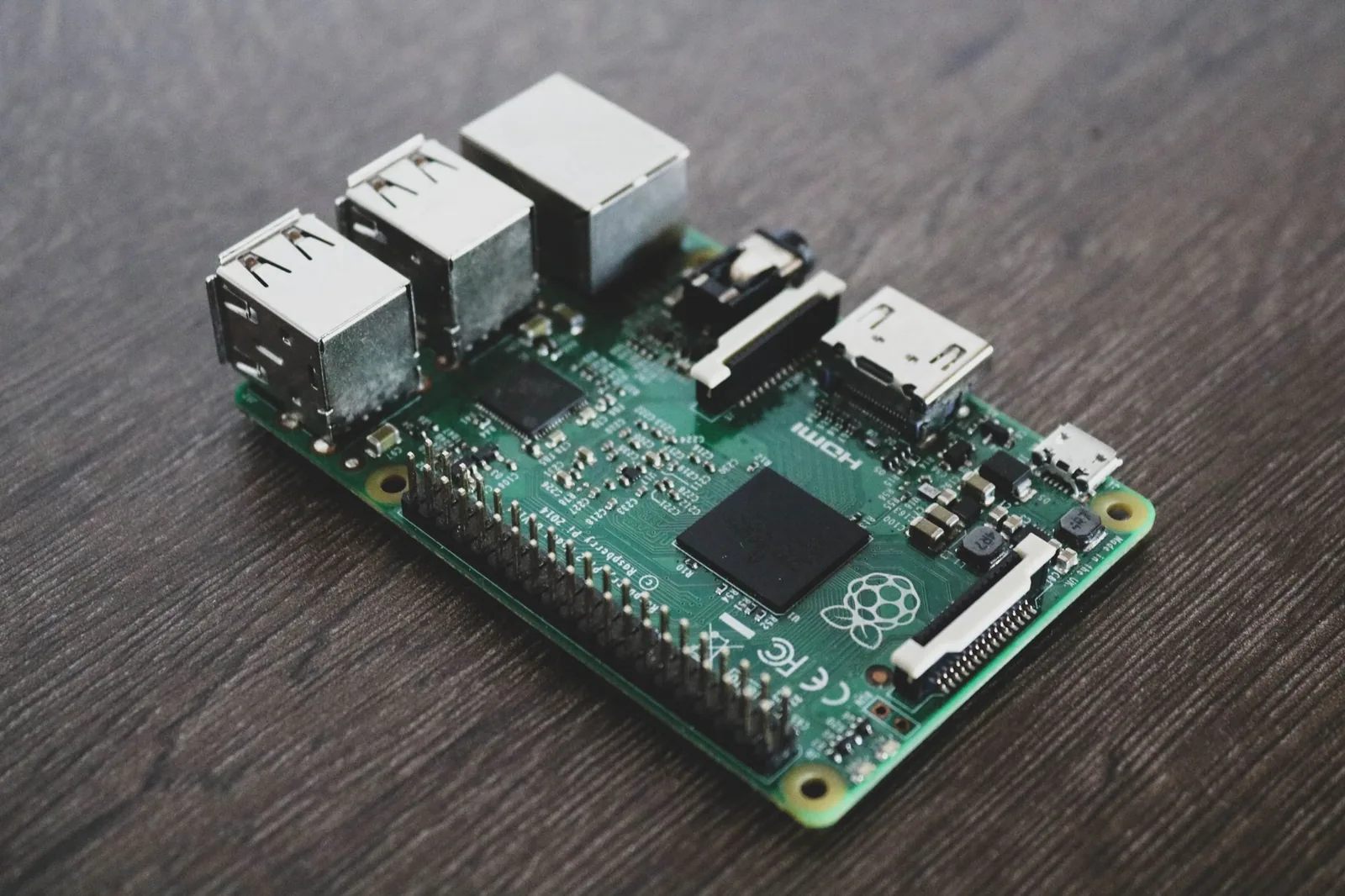
Liquid AI's LFM2.5-2.6B, announced this week, is the latest in a small but growing class of open-weight models built explicitly for agentic workloads on modest hardware — phones, laptops, and yes, a Raspberry Pi. Let's look at what actually ships, where it fits, and what breaks when you try to run production agents on it.
What LFM2.5-2.6B actually is
LFM2.5-2.6B is a 2.6-billion-parameter open-weight language model from Liquid AI, a Boston-based startup spun out of MIT in 2023. Liquid's pitch is that the model is tuned for function calling, tool use, and multi-turn instruction following at edge scale — meaning it targets the exact behaviors an agent needs, not general chat quality.
A few things matter here for builders:
- Open weights. You can download the model, quantize it, and ship it inside a desktop app, mobile app, or on-prem server without vendor lock.
- Small footprint. At 2.6B params in native precision, you're looking at roughly 5-6 GB of RAM. Quantize to 4-bit and you're under 2 GB — comfortable on a Raspberry Pi 5 with 8 GB and fast on any recent laptop.
- Agentic training focus. Liquid tuned it for structured output and tool calls, which is where general small models tend to fall apart.
I want to be blunt: this is not a Claude Sonnet or GPT-4-class model. On complex reasoning, coding from scratch, or ambiguous instructions, a 2.6B model will underperform a hosted frontier model by a wide margin. That's not the point. The point is that a lot of the pipes inside a real agent workflow don't need frontier reasoning — they need reliable, cheap, private inference over well-defined tasks.
Why on-device agents changed from cute demo to real option
The narrative for two years was "small models are toys, real agents run in the cloud." A few things quietly moved:
- Function-call fine-tuning got good. Models like Phi-3, Qwen 2.5 series, Llama 3.2 3B, and now LFM2.5-2.6B are explicitly trained to emit clean JSON tool calls. That's the single biggest failure mode of small models in agent loops, and it's mostly solved for narrow tool sets.
- Runtimes got fast. llama.cpp, Ollama, MLX on Apple Silicon, and ONNX Runtime with QNN on Snapdragon all deliver 20-60 tokens/sec on consumer hardware with 4-bit quantization.
- Structured output enforcement is mainstream. Grammar-constrained decoding (GBNF in llama.cpp, Outlines, XGrammar) means you can force valid JSON even from a small model. This alone raises tool-call success rates dramatically.
- Latency matters more than people admit. A local call returns in 100-400 ms. A round-trip to a hosted API is 800-2000 ms. For an agent that chains 8 steps, that's the difference between "feels instant" and "wait, is it broken?"
Put together, running a 2.6B model on a laptop to drive a real agent stopped being a hobby project sometime this year.
Where a small on-device model actually fits
Here's the honest split I use when scoping client work:
| Task type | Small local model | Hosted frontier model |
|---|---|---|
| Classify email into 6 categories | ✅ Excellent | Overkill |
| Extract 12 fields from a structured invoice | ✅ Excellent | Overkill |
| Route a support ticket to one of 4 queues | ✅ Excellent | Overkill |
| Draft a personalized reply referencing 3 CRM fields | ⚠️ Usable with careful prompting | ✅ Better quality |
| Summarize a 40-page contract with legal nuance | ❌ Will miss things | ✅ Required |
| Multi-step reasoning across 5 tools with recovery | ❌ Fragile | ✅ Required |
| Generate code from a vague spec | ❌ Weak | ✅ Required |
| Redact PII before it leaves the device | ✅ Ideal (data never leaves) | ❌ Wrong location |
The pattern: use the small model for classification, extraction, routing, and structured transformations. Use the frontier model for generation, judgment, and cross-domain reasoning.
An agent that runs 90% of its steps on-device and only escalates the hard 10% to Claude or GPT can cut API spend by 70-85% while getting faster overall.
A working setup on a Raspberry Pi 5
Let's build something concrete. Here's how I'd stand up an inference server for LFM2.5-2.6B on a Pi 5 (8 GB) so a local agent can hit it over HTTP.
# On the Pi (Ubuntu 24.04 arm64)
sudo apt update && sudo apt install -y build-essential cmake git

# Build llama.cpp
git clone https://github.com/ggerganov/llama.cpp
cd llama.cpp
cmake -B build -DGGML_NATIVE=ON
cmake --build build --config Release -j4

# Pull the GGUF (once Liquid publishes on HF; use the Q4_K_M quant)
# Placeholder path — check the current model card for the exact repo
huggingface-cli download LiquidAI/LFM2.5-2.6B-GGUF \
  LFM2.5-2.6B-Q4_K_M.gguf --local-dir ./models

# Start the OpenAI-compatible server
./build/bin/llama-server \
  -m ./models/LFM2.5-2.6B-Q4_K_M.gguf \
  -c 8192 \
  --host 0.0.0.0 --port 8080 \
  --n-gpu-layers 0
Now from any device on your network, you have an OpenAI-compatible endpoint at http://raspberrypi.local:8080/v1. Any tool that speaks the OpenAI API — LangChain, Instructor, your own Python — talks to it unchanged.
A quick sanity check for function calling:
from openai import OpenAI

client = OpenAI(base_url="http://raspberrypi.local:8080/v1", api_key="local")

tools = [{
    "type": "function",
    "function": {
        "name": "classify_email",
        "description": "Classify an inbound email",
        "parameters": {
            "type": "object",
            "properties": {
                "category": {
                    "type": "string",
                    "enum": ["support", "sales", "billing", "spam", "personal", "other"]
                },
                "urgency": {"type": "string", "enum": ["low", "medium", "high"]}
            },
            "required": ["category", "urgency"]
        }
    }
}]

resp = client.chat.completions.create(
    model="lfm2.5",
    messages=[
        {"role": "system", "content": "You classify emails. Always call the tool."},
        {"role": "user", "content": "Hi, my invoice for October is wrong, please fix ASAP."}
    ],
    tools=tools,
    tool_choice="required",
    temperature=0.1,
)

print(resp.choices[0].message.tool_calls[0].function.arguments)
# -> {"category": "billing", "urgency": "high"}
On a Pi 5 with the Q4 quant, expect roughly 8-15 tokens/sec — plenty for classification-style calls that return 30-80 tokens. On an M-series MacBook or a decent Windows laptop, you'll see 40-80 tokens/sec.
The hybrid architecture that actually works
The pattern I keep coming back to for client work is a triage-then-escalate loop:
Inbound event
   │
   ▼
Local LFM2.5-2.6B ──► extract fields, classify, decide
   │
   ├── Simple case (75-85% of traffic)
   │      └─► Execute directly, log, done
   │
   └── Ambiguous / high-stakes case
          └─► Package context, escalate to Claude/GPT
                 └─► Human review if confidence < threshold
Concretely, here's what a hybrid router looks like:
async def handle_ticket(ticket: dict) -> dict:
    # Step 1: local model does the cheap work
    triage = await local_llm.classify(ticket, schema=TriageSchema)

    # Step 2: cheap path — 80% of traffic ends here
    if triage.confidence >= 0.85 and triage.category in SIMPLE_ROUTES:
        return await execute_route(triage.category, ticket)

    # Step 3: escalate only when the small model is uncertain
    #         or the case is inherently complex
    context = build_context(ticket, triage)
    reply = await claude.generate_reply(context)

    # Step 4: human-in-the-loop for the last mile
    if reply.risk_score > 0.6:
        return await queue_for_human(ticket, reply)

    return await send(reply)
The economics of this shift matter. A hosted model call at scale might cost $0.003-0.015 per request depending on tokens. Multiply by 50,000 tickets/month and you're at $150-750. If 80% of those tickets get resolved by a local model on hardware you already own, you cut that bill by 4-5x — and you get a faster, more private system as a byproduct.
Where small on-device models fail (be honest)
I've deployed enough of these to know the failure modes. Skip these lessons at your own cost.
1. Long-context reasoning falls apart. LFM2.5-2.6B advertises useful context, but small models degrade fast past 4-8k tokens of actually-relevant content. Do retrieval and pass tight, relevant chunks. Don't stuff 30k tokens and hope.
2. Multi-hop tool chains compound errors. If each tool call has a 95% success rate, a 6-step chain succeeds 74% of the time. Small models are worse at recovery — they don't notice when a tool returned garbage. Design for 1-2 tool calls per turn max, and have a supervisor (a larger model, or heuristics) catch failures.
3. Instruction drift. Small models forget the system prompt faster. Restate the constraint on every turn, or use structured decoding to force the shape.
4. Rare formats hurt. If your tool schema uses a rare enum value or a weirdly-nested JSON structure, expect it to hallucinate. Normalize your schemas, prefer flat structures, and validate outputs.
5. Non-English quality varies. Small models trained heavily on English will disappoint you on other languages. Test with real data before promising a client.
6. No, it can't code. Please don't try to have a 2.6B model write your production Python. Use it for extraction and routing. Let Claude Code or GPT handle codegen.
Deployment realities: what you'll actually run into
A few operational things nobody puts in the launch blog post:
- Thermal throttling on a Pi. Sustained inference heats the SoC. Use a heatsink and a fan or throughput drops 30-40% after 10 minutes.
- Cold-start on constrained devices. Loading a 2 GB model from SD card takes 8-15 seconds. Keep the server warm; don't spawn per request.
- Memory pressure. A Q4 quant fits in 2 GB, but the KV cache grows with context. At 8k context you're using 3-4 GB total. Cap your context aggressively.
- License. Read the model license before you ship it in a commercial product. Open weights ≠ MIT license. Some Liquid releases have used their own terms; check the current model card, don't assume.
- Update discipline. Model weights get better every few months. Have a way to A/B test a new quant against your existing prompt suite before you swap it in.
- Observability. Log every tool call, every confidence score, every escalation. You can't tune a hybrid pipeline you can't see.
How BizFlowAI approaches this
When a client's automation budget starts creeping past a few hundred dollars a month in API spend, or their data is genuinely sensitive (health records, financial documents, internal customer lists), we scope a hybrid architecture from day one. That usually means a small on-device or on-prem model doing triage, extraction, and structured routing — with Claude reserved for generation and the hard 15% of cases. We benchmark two or three candidate small models (LFM2.5-2.6B, Qwen 2.5 3B, Llama 3.2 3B) against the client's actual workload, not a public leaderboard, and pick the one that hits their accuracy floor with the smallest footprint.
If you're staring at an AI bill that keeps growing, or you can't send customer data to a hosted API for compliance reasons, this is the exact seam where a hybrid design pays for itself in a quarter. Book a discovery call and we'll walk through your workflow, identify the 60-80% of steps that can move on-device, and give you a concrete migration plan — no six-week strategy deck.
The short version
LFM2.5-2.6B is one more signal that agent infrastructure is bifurcating: hosted frontier models for the reasoning-heavy 10-20% of work, small on-device models for the structured, repetitive 80-90%. If you're building agents in 2026 and still routing every step through a hosted API, you're leaving money, latency, and privacy on the table. Start with your cheapest, highest-volume workflow. Wire up a local model. Measure the split. The economics will tell you the rest.
Work with BizFlowAI
If you'd rather have this built for you, that's what we do: production AI automation for solo founders and small teams — agents, integrations, and document pipelines that actually ship.
Book a free discovery call — 30 minutes, we map the highest-ROI automation in your workflow. No pitch deck, just engineering.
More guides like this on the BizFlowAI blog.
Frequently asked questions
What is LFM2.5-2.6B and what is it used for?
LFM2.5-2.6B is a 2.6-billion-parameter open-weight language model from Liquid AI, a Boston startup spun out of MIT. It is specifically tuned for function calling, tool use, and multi-turn instructions on edge hardware like laptops, phones, and Raspberry Pis. It is not a frontier model replacement but a workhorse for classification, extraction, and routing tasks inside agent pipelines. Quantized to 4-bit it runs in under 2 GB of RAM.
Can you run a real AI agent on a Raspberry Pi 5?
Yes. A Raspberry Pi 5 with 8 GB RAM can run LFM2.5-2.6B at Q4_K_M quantization through llama.cpp, producing roughly 8-15 tokens per second. That is sufficient for classification and structured extraction tasks that return 30-80 tokens per call. You expose an OpenAI-compatible HTTP endpoint via llama-server so any client library can talk to it unchanged.
When should I use a small local model versus Claude or GPT-4?
Use a small on-device model for classification, field extraction, routing, structured transformations, and PII redaction where data must stay local. Use a hosted frontier model for nuanced generation, multi-step reasoning across many tools, code generation from vague specs, and long-document analysis. A hybrid triage-then-escalate architecture handles 75-85% of traffic locally and only escalates ambiguous or high-stakes cases.
How much can a hybrid local/cloud agent save on API costs?
If 80% of requests are handled by a local model on hardware you already own, you can cut hosted API spend by 4-5x. For example, 50,000 tickets per month at $0.003-0.015 per hosted call costs $150-750; offloading routine steps locally reduces that bill dramatically while also lowering latency from 800-2000 ms per call to 100-400 ms.
Why do small language models fail in agent workflows?
Small models degrade past 4-8k tokens of relevant context, so long-document reasoning breaks down. They also struggle with multi-hop reasoning, ambiguous instructions, and code generation from vague specs. Function-call reliability is largely solved through grammar-constrained decoding (GBNF, Outlines, XGrammar), but you must use retrieval to keep context tight and escalate complex cases to a frontier model.