Gemini 4 Hydrogen: Is Your Premium Model Still Worth It?
▶ Watch the video version of this article
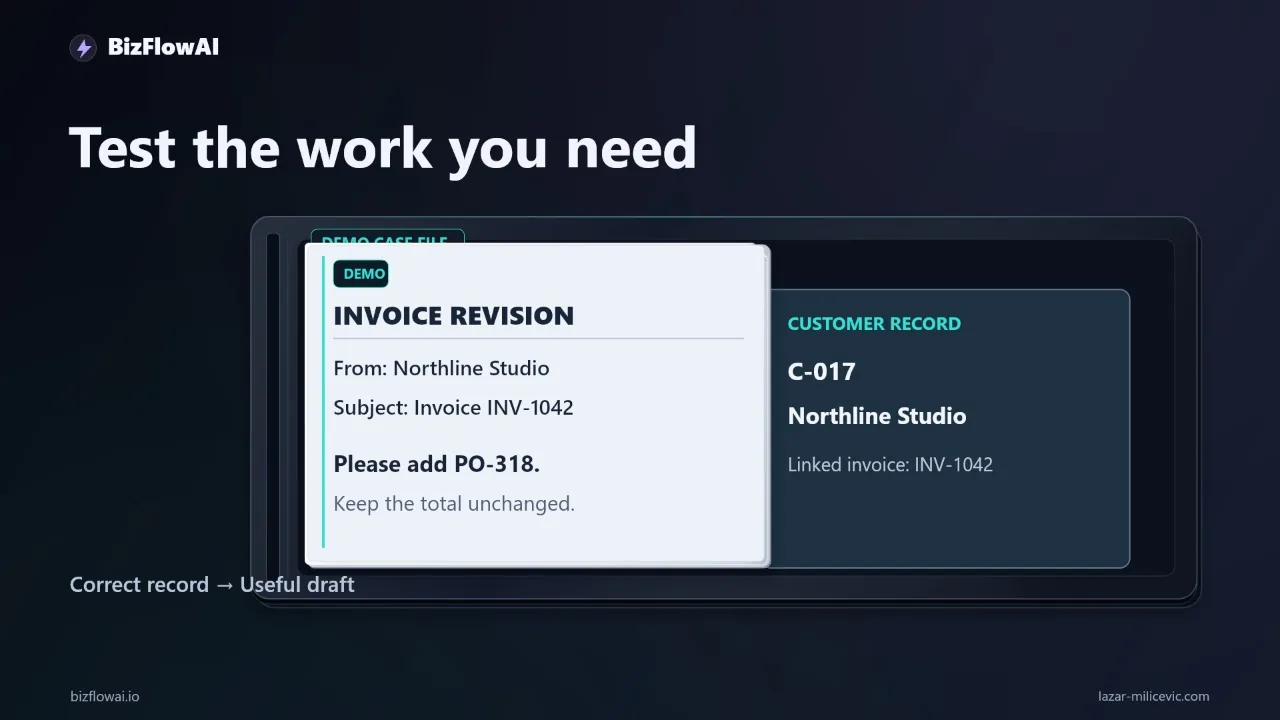
A customer asks for a revised invoice. Your AI drafts a polished reply, but selects the wrong customer record. If that reaches the approval queue—or worse, the customer—the model’s benchmark score will not help you fix it.
That is the decision behind the Gemini 4 Hydrogen news. Hydrogen has edged ahead of the more premium Gemini 4 Argon on one intelligence index. For a small business paying for AI-assisted admin, the useful question is narrower: can Hydrogen complete your actual workflow, with fewer corrections, at an acceptable cost?
What Hydrogen’s benchmark lead establishes
Gemini 4 Hydrogen scored 51 at its default high thinking level against Gemini 4 Argon’s 50 on the Artificial Analysis Intelligence Index. That is a reason to retest a premium-model default, not proof that Hydrogen will perform better in your business.
The Decoder reported the result after Google introduced Hydrogen on November 12, 2026. Argon became globally available on October 13, 2026, so the release sequence alone makes an old “newer premium model must be better” assumption worth questioning.
The result needs its settings attached. Google reports Hydrogen at 54 when set to xhigh. Hydrogen offers low, medium, high, and xhigh thinking levels; high is the default. If you cite the 54 result while testing your workflow at high, you are comparing different configurations. Higher thinking levels can also use more tokens, according to Google’s model card.
Google positions Hydrogen for rapid agentic workflows and Argon for deep, long-horizon reasoning. That positioning is more useful as a hypothesis than as a purchasing rule. An email-classification step may favor a different configuration from a task that must reconcile several records and explain an exception.
A second benchmark makes the point. In Zapier’s AutomationBench 1.0.6 results, Hydrogen passed 336 of 657 end-to-end business tasks at high effort, a 51.1% pass rate. Argon scored 51.3% on that test. Hydrogen leads on the cited composite intelligence index; Argon is slightly ahead in this separate business-task evaluation. Neither difference tells you which model will select the right invoice in your accounting system.
Define the completed task before choosing a model
For business automation, the unit of success is a correct final state, not a convincing response. In an invoice-request workflow, that means identifying the customer and invoice, capturing the requested change, preparing an accurate draft, and stopping at the right human approval point.
Suppose an email says, “Could you update the invoice for the additional work we discussed?” A fluent model can produce a courteous reply without knowing which invoice the customer means. If it guesses, the output looks finished while the work is not.
Write the expected behavior for each situation before you run either model:
| Incoming request | Required result | Failure to catch |
|---|---|---|
| Customer and invoice are unambiguous | Select the matching record and prepare a draft showing the requested change | Correct wording attached to the wrong record |
| Invoice number is missing, but one record clearly matches the supplied context | Propose that record and show the evidence to the approver | Hiding the basis for the match |
| Customer name matches multiple records | Request clarification or route to a person | Guessing a record |
| Request involves a change the model cannot verify | Flag the unsupported detail for review | Inventing an amount or agreement |
| Message is unrelated to an invoice change | Route it to the appropriate workflow | Forcing it into the invoice process |
This definition separates extraction, record selection, and action. The model may be good at one and unreliable at another. You can use it to draft while keeping record selection deterministic, or let it suggest a record while requiring a person to confirm the match. You do not have to give one model ownership of the whole process.
The distinction also explains why a chat-window trial often disappoints. The chat may summarize an email well, but it cannot finish the job unless your Gmail inbox, customer records, accounting system, and approval queue exchange the necessary data. Switching models does not build those connections.
Run a fair comparison without letting either model act
Test Hydrogen and your current model against the same sanitized requests, instructions, available records, and permitted tools. Keep outgoing messages and accounting changes disabled. A model comparison is only useful if differences in the results come from the model or its documented settings, not from different access to information.
Start with a small set drawn from one repetitive workflow. Include routine requests, missing details, lookalike customer names, conflicting records, and cases that require escalation. Prepare the expected customer record, invoice record, draft requirements, and approval decision in advance. Sanitize personal and financial information before sending examples to a model provider.
Use a fixed output contract. For example:
customer_record_id: "record-or-null"
invoice_record_id: "record-or-null"
requested_change: "plain-language description"
evidence:
  - "facts from the message or permitted records"
draft_reply: "draft only; never send"
needs_human_review: true
review_reason: "missing invoice number"
The contract makes omissions visible. A draft with an empty invoice_record_id is not a completed invoice update. A populated ID with no supporting evidence deserves scrutiny. Your workflow should reject unknown IDs rather than accepting a plausible-looking string.
For each run, record whether the task met its expected outcome, whether the right records were selected, elapsed time, model cost, retries, and human correction needed. Treat a request for clarification as a success when the evidence is genuinely ambiguous. Treat an unsupported guess as a failure even if the prose sounds confident.
A compact run record might look like this:
case_id: "ambiguous-customer"
model: "gemini-4-hydrogen"
thinking_level: "high"
expected_behavior: "escalate without selecting an invoice"
actual_behavior: "requested clarification"
correct_record: null
completed_correctly: true
human_correction: "none"
retries: "record each attempt"
elapsed_time: "measure during the run"
billed_cost: "record from actual usage"
Do not substitute a benchmark cost for the billed_cost field. Zapier estimates Hydrogen’s high-effort benchmark cost at $0.82 per task, but describes that as a list-price estimate with caching—not a customer bill. Your prompts, context, cache behavior, thinking level, retries, and provider charges determine your run cost.
A small test is a filter, not a reliability guarantee. If one model repeatedly guesses records that the other escalates, you have found a reason to stop or redesign the task. If both look promising, run a larger trial beside your existing process before either model receives permission to send a message or change an accounting record.
Measure corrections, retries, and the handoff
The cheaper-looking model is not cheaper if a person must repeatedly repair its work. Compare the cost of getting an approved, correct result—not just the model charge for a successful-looking first response.
Keep these measurements separate:
| Measure | What it reveals |
|---|---|
| Correct final state | Whether the workflow met its stated requirements |
| Wrong-record selections | A failure that polished writing can conceal |
| Human correction | How much review work the draft created |
| Retries | Extra time and model usage needed to finish |
| Clarification and escalation | Whether uncertainty was handled safely |
| Actual billed usage | What your configuration cost to run |
| Elapsed time | Whether the workflow is usable at your pace |
Then inspect the failures, not just the averages. A model that handles routine email quickly but occasionally selects the wrong invoice may be unsuitable for unattended record changes. The same model could still be useful for extracting a requested change into a draft that a person checks.
This is also where benchmark boundaries matter. Zapier tests agents in simulated business apps and checks whether the final environment satisfies every required assertion. Its tested agents cannot ask clarifying questions and receive no human approval during the benchmark task. That makes the test informative about end-to-end task execution, but it does not measure the approval process you may deliberately require in production.
Design the handoff as part of the workflow:
Incoming request
    → retrieve permitted customer and invoice records
    → model extracts request and proposes a match
    → validate proposed IDs against retrieved records
    → if ambiguous or invalid: request human review
    → otherwise: prepare draft with evidence
    → human approves
    → authorized system performs the change or sends the reply
The validation step matters more than a confident explanation. The model should not be able to create an invoice ID merely by writing one into structured output. The system must check that the ID exists, belongs to the relevant customer, and was among the records the model was permitted to consider. Keep the original message and the proposed change visible to the approver so they can spot a mismatch without reconstructing the entire run.
Google’s Hydrogen model card warns about hallucinations, occasional slowness or timeouts, and increased token use at higher thinking levels. Plan for those behaviors in both the test and the production handoff. A timeout needs a retry or a safe stop; it must not silently become an approved task.
Give the premium model a specific job to earn
Keep Argon where your workflow tests show it handles necessary work that Hydrogen cannot complete reliably. Use Hydrogen where it meets the same acceptance criteria with less total effort or cost. There is no requirement to make one model the default for every task.
A practical routing policy can be simple. Use the tested configuration for routine requests with clear records. Route ambiguous or unusually involved requests to a person, a different model, or both. Preserve the ability to change that routing when your incoming work changes.
Do not route by a model’s label alone. Route by evidence: the task type, the records available, the failure modes you can tolerate, and the results of your comparison. If Hydrogen produces a better draft but Argon is more reliable at a particular record-reconciliation step, you can assign them different jobs. If neither reliably selects the right record, fix the retrieval and validation process before buying more model capability.
The decision is not “Hydrogen won a benchmark, so cancel Argon.” It is: which configuration produces an approved, correct result for this workflow, and what work remains for a human? That is a model budget you can revisit without rebuilding the entire operation.
Where BizFlowAI fits
Lazar Milićević is a senior engineer who builds AI automations for solopreneurs and small teams. The practical starting point in this comparison is the workflow around the model: which systems supply records, what the agent may draft, what gets validated, and where a person approves the result. Those boundaries let a small team test Hydrogen against Argon without treating a benchmark score as permission to automate an irreversible action.
Want more like this?
The channel is named BizFlowAI, but its URL has not been confirmed. Check the official channel listing before subscribing.
I’m Lazar Milićević, a senior engineer who builds AI automations.
BizFlowAI covers practical AI automation for solopreneurs and small teams.
Frequently asked questions
What is Google’s Gemini 4 Hydrogen?
Gemini 4 Hydrogen is a Google model that replaces the Flash series. According to The Decoder, it outscores the larger, pricier Gemini 4 Argon on the independent Artificial Analysis Intelligence Index. That result makes Argon worth reassessing, but it does not show that Hydrogen is the cheapest model across vendors or the best choice for every task. The report also says Hydrogen falls short on agentic coding.
How do I compare Gemini 4 Hydrogen with my current model?
Start with twenty representative, sanitized examples from one repetitive workflow, and write the expected result for each before testing. Give Hydrogen and your current model the same instructions, context, and permitted tools in a test environment with outgoing actions disabled. Track task accuracy, record selection, time, cost including retries, and human corrections. Treat an ambiguous case as successful only if the model asks for help rather than guessing.
Why does selecting the right record matter when testing AI for invoice requests?
A model can draft a convincing reply to a customer’s invoice request while attaching the wrong invoice. That creates more work and could cause an audit problem. For this workflow, success means producing a correct draft linked to the correct customer record, with the requested change visible to the person approving it. Measuring writing quality alone would miss a critical failure.
When should I use Gemini 4 Hydrogen vs Gemini 4 Argon?
Use the smaller Hydrogen model where your own tests show it completes the required work reliably. Keep the larger Argon model for tasks where it delivers a justified improvement. Hydrogen’s reported benchmark lead makes paying for Argon worth questioning, but it does not establish that Argon is obsolete for your business. Test both on your workflow before changing models, and run a larger trial before allowing a promising model to act.